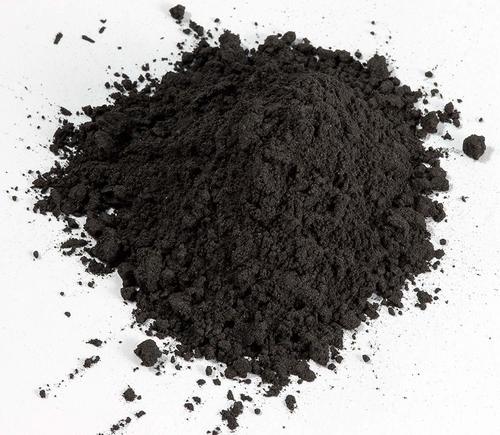
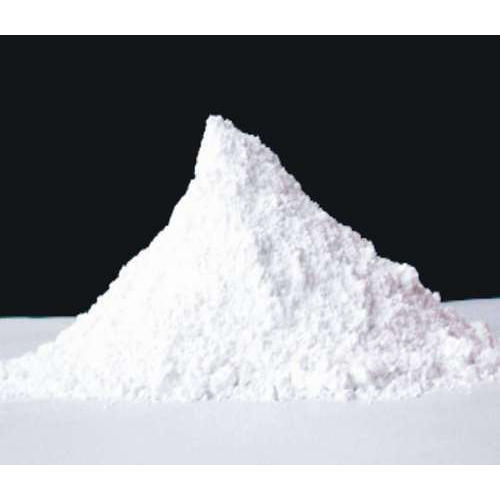
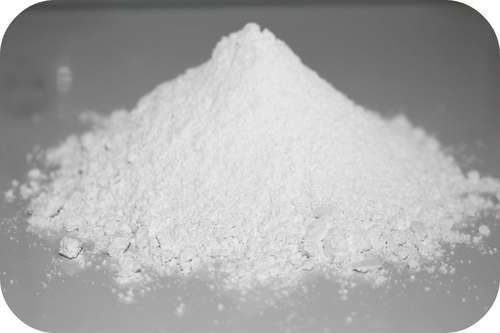
About Whitting Powder (Ordinary & Micronised)
Whiting Powder (Ordinary & Micronised) - Caco3 :- 85 (+2) %
- Fe203 :-1.00 %
- Sio2 :-9.00 %
- Al203 :- 3.50 %
- Mgco3 :-1.00 %
- L.O.I :- 37.00 %
- Mesh Size :-500 +
Whiting Powder-Pbr - Caco3 :-85 (+2) %
- Fe203 :-2.00 %
- Sio2 :-9.00 %
- Al203 :-2.50 %
- Mgco3 :-1.00 %
- L.O.I:-37.00 %
Key Applications Across IndustriesWhitting Powder serves as an essential filler in a range of industries including paints, paper, plastics, ceramics, and construction. Its stable properties and smooth finish ensure optimal performance in enhancing product strength and surface quality without compromising dimensional stability. The powders fine particle size, both in ordinary and micronised form, adapts to diverse industrial needs, offering utility from architectural putty to high-quality printing paper.
Exceptional Performance CharacteristicsThe powders chemical composition of 98% CaCO3 ensures high purity and consistent quality. With low porosity, low water absorption, and excellent thermal conductivity properties, it provides stability in demanding applications. Its moderate hardness (3 on the Mohs scale) and fine texture allow for easy mixing and smooth finishes. These features make it suitable for applications requiring both structural integrity and surface aesthetics.
FAQs of Whitting Powder (Ordinary & Micronised):
Q: How is Whitting Powder used in paints and plastics?
A: Whitting Powder acts as an effective filler in paints and plastics, enhancing opacity, smoothness, and structural consistency. It helps achieve a uniform texture while improving the cost efficiency of the final product.
Q: What process is followed to manufacture Whitting Powder (Ordinary & Micronised)?
A: Whitting Powder is produced by finely grinding high-grade calcium carbonate (CaCO3) to obtain either ordinary or micronised grades, ensuring smoothness and appropriate particle size for industrial applications.
Q: When should I use micronised versus ordinary Whitting Powder?
A: Micronised Whitting Powder is preferred when finer texture and enhanced surface finish are important, such as in specialty paints or high-quality paper. Ordinary grade is suitable for general filling and structural applications.
Q: Where can Whitting Powder be applied in constructions?
A: It is frequently used in construction as a filler in putties, plasters, and cement-based products, contributing to improved surface finish, dimensional stability, and durability in buildings.
Q: What are the main benefits of using Whitting Powder in ceramics?
A: Whitting Powder provides ceramics with a smooth finish, stable structure, and improved thermal insulation due to its low thermal conductivity and low porosity, making finished products more durable.
Q: How does Whitting Powder improve paper production?
A: In paper manufacturing, Whitting Powder enhances brightness, printability, and texture, while also helping control production costs by partially replacing more costly raw materials.


 Get Latest Price



 Send Inquiry