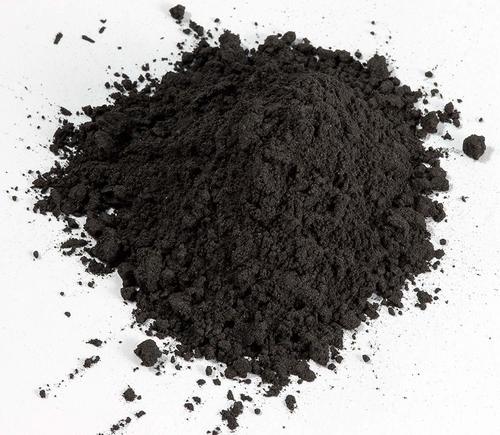
About Antisettling Agent
Anti Settling & Dispersing Agent
Specifications:
- Composition: Balanced Mixture If Nonionic & Anionic
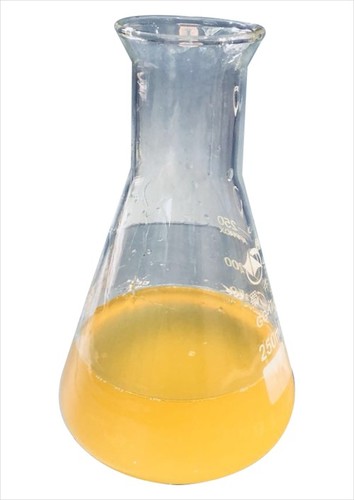
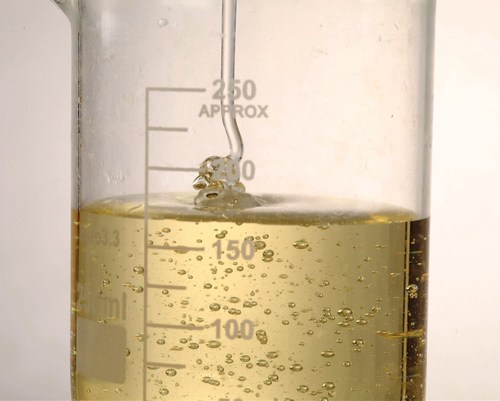
- Appearance: Yellow Liquid
- Solubility: Soluble In Water
- Ph Of Water Solution: 7.5 To 8.0
- Stabilities: Stable In Range Of 2 To 12. Stable In Hard Water.
Advantages In Using Antisettling agent
Addition Of Antisett Helps In:
- Providing Effective And Trouble Free Control Of "Settling" And "Segging"
- Proper Pigment Suspension
- Flow Control
- Better Adhesion
- Corrosion Resistance
- Water Resistance
- Anti Staining Of Paints
- Without Affecting Colour, Gloss Or Drying Time.
Recommended Dosages
- 0.1 % To 0.25 % On The Weight Of Pigments And Extenders.
- If Required Effect Is Not Obtained Then The Quantity Should Be Gradually Increased.
- For Iron Oxide Paints About 0.5 % - 1 % Off Antisett-117 Can Be Used.
- Leveling Agent
- Base: Oil Base Liquid
- Apearance: Pele Yellow
- Viscosity: 400 Cps
- Ph: 7
- Nature: Non Ionic
Use: Oil Bound Distember // Acrylic Emualsion Synthetics Enimal
Dosage: 1 %
Benefit: Improve The Gloss, Adhesion, Leveling, Hiding & Pigment Despersion.
Exceptional Antisettling PerformanceOur antisettling agent uses modified Polyamide/Amide wax chemistry to deliver high efficiency in preventing pigment and filler separation throughout storage and application. Its superior formulation ensures even distribution of solids, maintaining product quality over time and reducing re-mixing or agitation requirements.
Designed for Diverse Liquid FormulationsThis product excels in paints, coatings, and inks, providing a smooth surface finish and stability. Its low porosity and high dimensional stability allow it to maintain integrity under variable processing and storage conditions, making it suitable for a wide range of industrial formulations.
FAQs of Antisettling Agent:
Q: How does the antisettling agent function in liquid formulations?
A: The antisettling agent works by creating a structured network within the liquid medium that physically supports pigments and fillers, preventing them from settling to the bottom during storage or application. This ensures uniform color and consistency in paints, coatings, and inks.
Q: What are the benefits of using an antisettling agent with a melting point above 250C?
A: A melting point above 250C allows the antisettling agent to withstand elevated manufacturing or storage temperatures without degrading or losing effectiveness, ensuring long-lasting antisettling action and maintaining product quality.
Q: When should this antisettling agent be added during the manufacturing process?
A: It is best to incorporate the antisettling agent during the pigment dispersion phase or before the final grinding step in paint, coating, or ink manufacturing. Early addition aids uniform distribution and optimal antisettling efficacy.
Q: Where can this antisettling agent be used beyond paints and coatings?
A: Besides paints, coatings, and inks, this agent can be used in any liquid system prone to pigment or filler settling, such as adhesives, industrial primers, or specialty chemical formulations requiring stable dispersion.
Q: What is the recommended process for dispersing the antisettling agent?
A: For optimal performance, disperse the powder or granules thoroughly into the liquid medium using high-shear mixing. Ensure uniform distribution to unlock the full antisettling potential and achieve a smooth surface finish.
Q: What advantages does the low water absorption property offer?
A: Low water absorption (<0.5% at 25C) helps prevent moisture-induced clumping and enhances product stability, especially in humid environments, ensuring reliable performance during storage and usage.
Q: How does this product support export, supply, and trading operations in India?
A: With its stable physical form, high purity, and broad applicability, our antisettling agent is well suited to the demands of distribution, export, and trading within India, meeting stringent quality requirements for various industrial clients.


 Get Latest Price



 Send Inquiry